Orange and Black Everywhere: How a Championship Rewired San Francisco's Civic Soul in the Fall of 2012
Cities have short memories for ordinary victories. A strong regular season, a division title, even a playoff run—these events generate brief spikes of communal enthusiasm before the ordinary rhythms of urban life reassert themselves. A World Series championship is different. Its effects propagate outward from the ballpark in ways that are difficult to predict and, in retrospect, surprisingly difficult to measure. In San Francisco during the autumn of 2012, those effects were visible on storefronts, audible in neighborhood conversations, and legible in the way residents carried themselves through streets that had, for a few extraordinary weeks, become something more than streets.
The Morning After
For many San Francisco residents, the first indication that something had genuinely changed came not during the celebration itself but in the hours immediately following. Maria Delgado, who has operated a bakery on Valencia Street since 2007, recalls opening her doors the morning after the clinching game to a line that stretched half a block before 7 a.m. "It wasn't just that people were happy," she said. "It was that they wanted to be around other people who were happy. They wanted to talk about it. They wanted to share it."
That impulse—to convert private joy into communal experience—manifested across the city in ways both large and small. Restaurants that had stayed open late to accommodate viewing parties found their customer relationships subtly recalibrated. Regulars who had never spoken to one another had spent hours side by side during the Series games, and those shared hours created a residue of familiarity that persisted. Neighborhood bars reported that the championship had effectively compressed years of community-building into a matter of weeks.
What the Parade Revealed
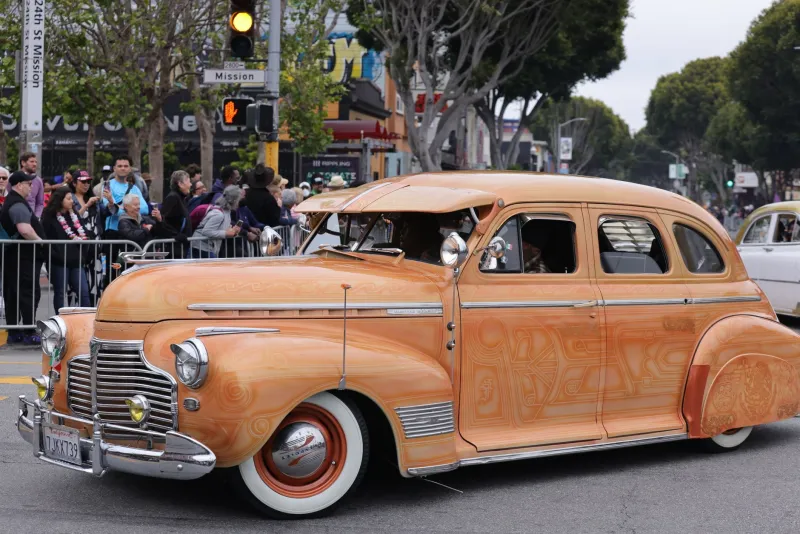
The championship parade that moved through the city's streets drew an extraordinary number of participants. Estimates varied, but the consensus placed the crowd well into the hundreds of thousands—a figure that surprised even organizers who had anticipated significant turnout. What struck many observers was not the size of the crowd alone but its composition. The parade route drew people from neighborhoods that rarely share public space: residents of the Sunset District stood alongside those from the Mission, Nob Hill, and the Tenderloin. For a city that is, in many respects, a collection of distinct and sometimes insular communities, the parade represented an unusually broad convergence.
James Okafor, a community organizer who has worked in the Bayview-Hunters Point neighborhood for over fifteen years, described the parade's effect with careful precision. "Sports championships create these temporary conditions where normal social sorting breaks down," he said. "The question is always whether anything lasting comes from that. In 2012, I think some things did. Not everything, but some things."
The specific things Okafor referenced included a series of community events organized in the weeks following the parade that drew notably more diverse attendance than their predecessors. Whether the championship was directly responsible for that shift or whether it simply coincided with other factors is difficult to establish. What is clear is that civic leaders noticed and, in several cases, attempted to leverage the moment.
Commerce and the Championship Effect
The economic dimensions of the 2012 championship were visible almost immediately. Licensed Giants merchandise moved through retail channels at a pace that vendors described as without precedent in their experience. Memorabilia shops in and around the ballpark reported inventory shortages within days of the final game. The demand extended well beyond traditional sports retail—restaurants created championship-themed menu items, local breweries released commemorative beers, and small businesses across the city found creative ways to align themselves with the celebration.
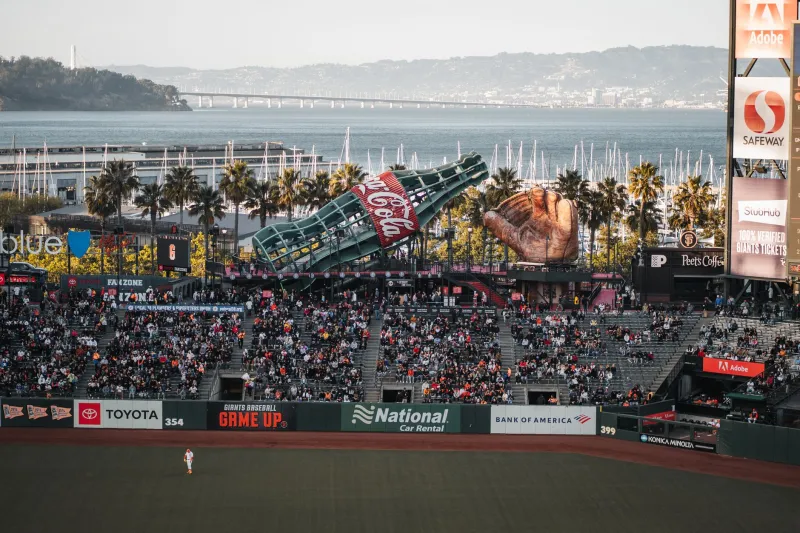
The longer-term commercial effects were subtler but arguably more significant. Tourism figures for the months following the championship showed meaningful increases in visitors specifically citing the Giants and AT&T Park as motivating factors. The ballpark itself, already one of the most visited in the country, saw its cultural profile elevated. Travel publications that had previously mentioned the stadium in passing began featuring it as a destination in its own right.
For smaller businesses, the championship's economic legacy was more complicated. Some proprietors reported lasting increases in foot traffic tied to the heightened civic energy that followed the title. Others noted that the surge was brief and that ordinary market conditions reasserted themselves within a few months. The honest assessment, according to several business owners interviewed for this piece, is that the championship created an exceptional window of opportunity—one that rewarded those who were positioned to act quickly and penalized those who were not.
Neighborhoods Transformed, Neighborhoods Unchanged
Any honest accounting of the championship's civic impact must acknowledge its uneven distribution. The celebration was most intense in neighborhoods with the deepest existing connections to the Giants—areas where the team's radio broadcasts had served as background music for decades, where bar owners knew their customers' favorite players by heart. In these communities, the 2012 title landed as the culmination of a long, shared narrative.
In other parts of the city, the championship registered as something more peripheral. Residents for whom baseball had never been a central cultural reference experienced the celebration as a spectacle rather than a personal triumph. This is not a criticism—cities are large and their populations are diverse, and no single event can mean the same thing to every resident. It is, however, an important qualification on any claim that the championship "unified" San Francisco in a simple or total sense.
What the championship did accomplish, more modestly but perhaps more durably, was to provide a shared reference point that cut across many of the city's internal divisions. The 2012 Giants became a common language—a set of names, moments, and images that a wide range of San Franciscans could invoke in conversation and expect to be understood.
The Identity That Remained
More than a decade removed from the championship, its traces remain visible in the city's cultural landscape. The orange and black color scheme, always associated with the Giants, carries an additional layer of meaning for residents who were present in October 2012. Certain bars and restaurants still display memorabilia from that season in positions of prominence, not as decoration but as testimony.
What the 2012 championship gave San Francisco, ultimately, was a story about itself—one that it could tell and retell, that it could use to explain to newcomers and remind longtime residents of something essential about the city's character. That story involves improbable comebacks, unheralded heroes, and a fanbase that sustained its faith through difficult stretches of a long season. It is, in the way that the best sports stories always are, a story about more than baseball.