A Swing for the Ages: Why Rentería's Series-Clinching Homer Endures in the Memory of Giants Faithful
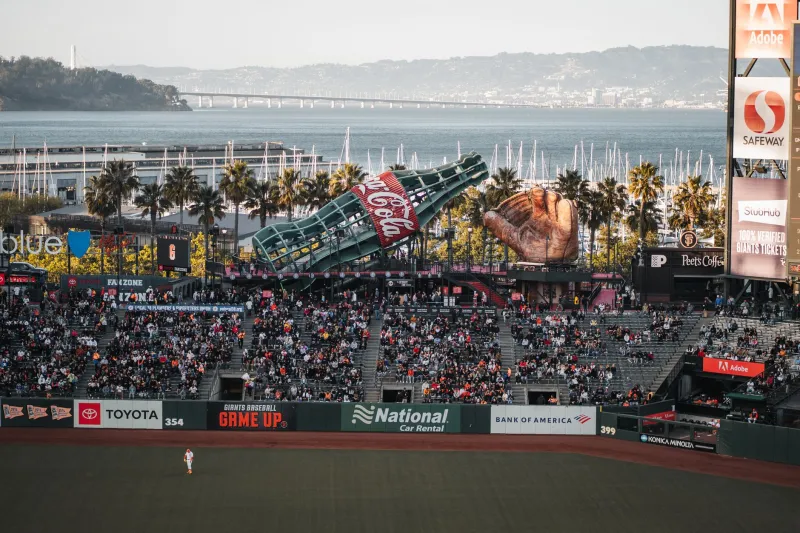
There are moments in sports that belong to the scoreboard, and then there are moments that belong to the people who witnessed them. Edgar Rentería's home run in Game 5 of the 2012 World Series falls unmistakably into the second category. Measured in feet and exit velocity, it was a competent piece of October baseball. Measured in its resonance across more than a decade of Bay Area fandom, it is something closer to mythology.
The WSC 2012 Vault has catalogued thousands of moments from that October—strikeouts, stolen bases, managerial decisions, and defensive gems—but no single clip in our archive has been replayed, debated, and emotionally revisited more than the one where Rentería's bat connected with Austin Jackson's fastball and sent it soaring into the night air above San Francisco.
The Anatomy of an Unforgettable Swing
What makes a moment stick? Sports psychologists and cultural historians have long wrestled with that question, and the Rentería home run offers a compelling case study. The swing itself was not the product of a slugger at the peak of his powers. Rentería was 35 years old in 2012, a veteran shortstop who had spent much of that regular season battling the accumulated wear of a long career. He was not expected to be the hero. That improbability, more than anything else, is what gave the moment its extraordinary staying power.
When an anticipated star delivers in a championship moment, the narrative confirms what everyone already believed. When an aging utility player—a man who had been released by two organizations in the preceding three seasons—steps into the most consequential at-bat of October and produces, the narrative ruptures expectation entirely. Fans are not merely pleased; they are astonished. And astonishment, unlike satisfaction, tends to calcify into permanent memory.
The pitch sequence that preceded the home run has been dissected frame by frame on fan forums for years. Detroit's pitching staff had been cautious with Rentería throughout the series, and that caution ultimately produced the very pitch he punished. There is a rich irony embedded in that sequence, and it is the kind of irony that keeps baseball conversations alive long after the final out.
The Forum Culture That Kept the Moment Alive
In the immediate aftermath of the 2012 World Series, the standard mechanisms of sports memory went to work. Highlight packages aired on national television. Newspaper front pages across the Bay Area ran the iconic images. Radio hosts replayed the audio call for days. But the longer life of the Rentería home run was built not by broadcasters or journalists, but by fans.
Message boards dedicated to Giants baseball began accumulating frame-by-frame analyses of the swing within 48 hours of the final out. Users uploaded GIF files, slowed the footage to a crawl, and debated the precise mechanics that allowed a 35-year-old with diminished bat speed to generate enough power for a postseason home run. Those threads, some of which ran to hundreds of replies, became reference documents for a generation of fans who would return to them every October for years afterward.
Social media amplified that culture significantly. Each anniversary of the 2012 championship has produced a fresh wave of replays, personal testimonials, and retrospective analysis. Fans recount where they were sitting when the ball left the park. Parents describe watching the game with children who have since grown up and moved away. Grandparents recall the moment as a kind of proof that patience in baseball, as in life, eventually rewards the faithful.
The Sports Bar Ritual
Across the Bay Area, a particular ritual has developed in October over the years since 2012. When the Giants are still alive in the postseason—or sometimes even when they are not—regulars at neighborhood sports bars will request that the Rentería home run be put on the screen. It is not merely a nostalgic gesture. It functions as a kind of benchmark, a reminder of what October baseball can feel like when everything converges at once.
Bar owners and managers in neighborhoods from the Mission District to the East Bay have noted this phenomenon independently, describing it in nearly identical terms: someone asks for the clip, it goes up on the screen, and the room quiets in a way that ordinary highlights never produce. There is a collective holding of breath, even among people who know precisely what is about to happen, followed by a reaction that is disproportionate to the circumstances. The ball clears the fence, and the bar sounds like it did in 2012.
That response—the willingness to feel something fully even when the outcome is already known—is the clearest evidence of the moment's genuine cultural weight. It is not nostalgia in the passive sense. It is something more active, more participatory.
What the Numbers Cannot Capture
The statistical record of the 2012 World Series is thorough and accessible. Box scores document every plate appearance, every pitch, every baserunner. Advanced metrics allow contemporary analysts to evaluate each decision with a precision that was not available in real time. But the Rentería home run demonstrates the limits of that documentation.
No metric captures the collective exhale of a city that had waited decades for a championship. No WAR calculation accounts for the symbolic weight carried by an aging veteran who had been counted out. The numbers confirm that the home run happened and that it was consequential. They do not—and cannot—explain why it continues to produce an involuntary emotional response in people who have watched it dozens of times.
That gap between the quantifiable and the felt is precisely where sports memory lives. The Rentería home run has taken up permanent residence in that gap, and every indication suggests it will remain there for as long as Bay Area baseball is played and discussed.
The Enduring Standard
In the years since 2012, the Giants have produced other memorable October moments, and other players have stepped forward in pressure situations. But Rentería's home run remains the measuring stick against which all subsequent clutch performances are evaluated. When a Giants player delivers in a critical postseason spot, the first comparison that surfaces—in broadcasts, in print, in casual conversation—is to that swing in Game 5.
That is the ultimate mark of a moment's cultural durability: not that it is remembered fondly, but that it becomes the language through which subsequent events are understood. The Rentería home run is no longer merely a historical fact. It is a reference point, a shared vocabulary, a piece of the architecture of Bay Area baseball identity. And if the volume of replays in our archive is any indication, it will remain exactly that for the foreseeable future.