One October and Nothing More: The 2012 Giants Who Never Walked a Postseason Stage Again
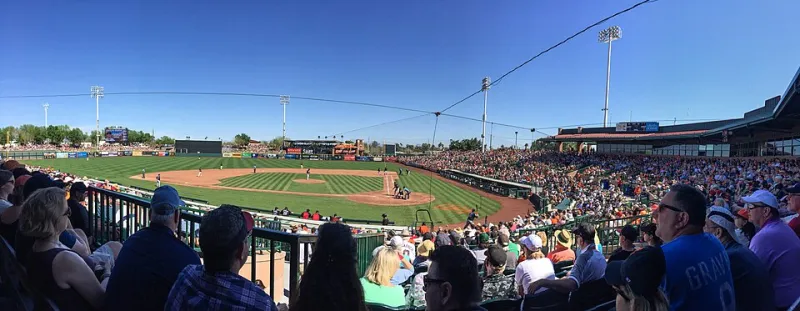
Photo: Don DeBold, CC BY 2.0, via Wikimedia Commons
There is a particular kind of athlete whose greatest professional moment arrives not at the summit of a long climb, but as a sudden, almost accidental gift—a championship ring earned during a season when everything aligned perfectly, when a manager trusted a roster deep enough to absorb every misfortune, and when October decided to be generous. For the San Francisco Giants in 2012, that generosity extended well beyond the names printed largest on the lineup card. It reached into the dugout corners, into the bullpen, into the bench seats occupied by men whose contributions were quieter but no less essential. And for more than a few of those men, that World Series title would represent the last time they ever played meaningful baseball in October.
This is not a lament. It is, rather, an honest accounting of what the sporting life sometimes delivers: one extraordinary chapter surrounded by ordinary ones.
The Bench That Built a Dynasty
Before examining individual fates, it is worth remembering just how deliberately Bruce Bochy constructed that 2012 roster. The Giants carried veteran depth specifically because October demands it. Bench players who could handle high-leverage pinch-hit situations, backup catchers capable of managing a pitching staff in a critical late inning, utility infielders who knew the strike zone well enough to work a walk when the game demanded patience—all of these contributors were present and accounted for during that championship run.
What the roster's construction could not guarantee, of course, was that any of those players would find themselves on another postseason team. Baseball's labor economics, the aging curve, roster construction decisions made by front offices across the league—all of these forces conspired against a second October for several of the 2012 Giants' quieter contributors.
Joaquin Arias and the Limits of a Perfect Fit
Few players embodied the 2012 Giants' depth philosophy more precisely than Joaquin Arias, the utility infielder who provided defensive versatility at multiple positions throughout the season. Arias was not a star, nor was he ever projected to become one. What he offered was reliability in a specific, carefully defined role—and during October 2012, that reliability had genuine value.
Following the championship, Arias remained in San Francisco through the 2014 season before departing as a free agent. He signed with the New York Mets and later with the Texas Rangers organization, but the postseason did not find him again. His career wound down quietly, as careers of his type often do, in the minor leagues and with brief organizational invitations that never translated into another big-league roster spot in October. He wore a championship ring, however, and that distinction is permanent.
Gregor Blanco's Journey After the Spotlight
Gregor Blanco arrived in San Francisco in 2012 as a reclamation project—a former top prospect whose career had stalled with the Atlanta Braves and Kansas City Royals organizations. The Giants gave him a genuine opportunity, and Blanco responded with the kind of season that reminded observers why he had once been considered a significant talent. His speed, his outfield range, and his ability to get on base made him a legitimate contributor to a championship roster.
Blanco remained a Giant through 2016, and while San Francisco returned to the postseason in 2014 and won another championship, the 2012 edition represented something specific and irreplaceable for a player who had waited so long for his moment. After departing San Francisco, Blanco did not find another postseason roster. His career concluded without a second October, though he had experienced one of the most memorable in recent memory.
Ryan Theriot and the Brief Championship Window
Ryan Theriot's tenure with the Giants was brief but precisely timed. A veteran infielder who had spent productive years with the Chicago Cubs and St. Louis Cardinals—including a World Series appearance with the Cardinals in 2011—Theriot brought experience and professionalism to San Francisco's bench in 2012. He understood October baseball in ways that younger players could not, and that understanding had value in a clubhouse navigating a difficult postseason path.
Theriot's time in San Francisco ended after 2012. He played briefly for the Los Angeles Angels organization in 2013 before his major-league career concluded. He had reached the World Series in consecutive years with two different franchises—a remarkable circumstance—but the 2012 championship with the Giants marked the final postseason appearance of his career.
The Catchers Behind the Catcher
Buster Posey's indispensability to the 2012 Giants was total and obvious. But championship rosters require backup catchers who can manage a pitching staff in emergency situations, and the men who occupied that secondary role during San Francisco's run faced the same uncertain futures that most backup catchers confront. The position is among the most difficult in professional baseball to sustain over a long career, and several of those who served behind Posey in 2012 found that their postseason window had closed permanently once they departed the Giants organization.
What the Ring Means Without a Second Chance
There is a philosophical question embedded in the circumstances of these athletes: does a single championship ring represent a complete career, or does it create an appetite that, if never satisfied again, becomes its own form of loss?
The men who were part of the 2012 Giants and never returned to October have answered this question in different ways, though most, when interviewed in the years since, have expressed gratitude rather than regret. The ring is real. The parade through San Francisco's streets in late October 2012 happened. The final out of the World Series was recorded with their names on the roster.
Baseball, unlike some team sports, is democratic enough in its roster construction that twenty-five men share a championship in a meaningful sense. The role player who appeared in two postseason games contributed to a title that the franchise and its fans will celebrate indefinitely. That contribution does not diminish because the player never reached October again.
A Permanent Address in Baseball History
The 2012 World Series roster is a fixed document now. It will not be revised or updated. Every name on it belongs to a championship, and that membership is unconditional. For the players examined here—men who gave San Francisco something essential during that October and then moved on to careers that never again intersected with the postseason—the vault of 2012 holds their finest professional hour.
Some of them are coaching. Some have returned to their home countries. Some are raising families in cities far removed from AT&T Park and the fog that rolled in off the bay during those October nights. All of them carry a ring, and all of them belong to something that cannot be taken away.
One October. Nothing more, and nothing less.