From the Shadows to the Spotlight: How San Francisco's Forgotten Men Defined a Championship
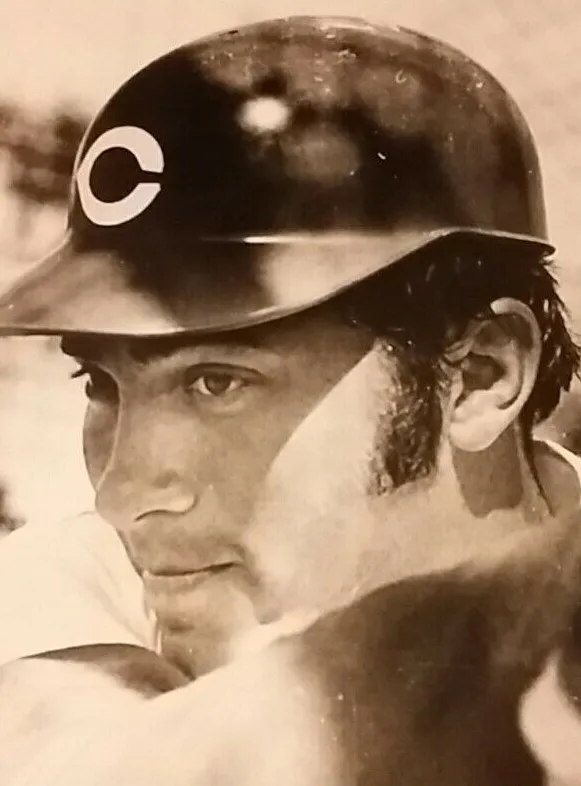
Photo: UPI, Public domain, via Wikimedia Commons
There is a particular kind of baseball player who defies easy categorization. He does not appear in the pregame feature segments. His jersey does not sell in bulk at the team store. His name is rarely invoked in the casual conversation of fans who follow the sport at a comfortable distance. And yet, when October arrives and every at-bat carries the weight of an entire season, it is precisely this player — the bench piece, the platoon bat, the utility man with the quiet glove — who so often provides the decisive contribution that no one quite anticipated.
The 2012 San Francisco Giants were, in many respects, a monument to this truth. Their championship run, which culminated in a sweep of the Detroit Tigers in the World Series, was constructed atop a foundation of elite pitching and disciplined organizational planning. But the structure's load-bearing walls were reinforced by a collection of contributors whose postseason impact stood in dramatic contrast to their modest regular-season billing.
The Architecture of a Deep Roster
Brian Sabean's front office had long understood a principle that many organizations pay lip service to without fully committing: that roster construction below the starting lineup is not merely an afterthought, but a genuine competitive advantage. The 2012 Giants bench was assembled with a specific philosophy in mind — versatility, veteran experience, and the psychological composure that only comes from having survived the sport's many indignities.
Analysts who revisited the roster composition in subsequent years noted that the San Francisco bench contained an unusually high concentration of players who had experienced meaningful postseason exposure prior to 2012. That accumulated October knowledge, diffuse and difficult to quantify, manifested in moments that shifted series and silenced opposing crowds.
Cody Ross had already authored one of the more improbable individual postseason performances in recent memory during the Giants' 2010 championship run, a fact that gave him a particular stature within the clubhouse even as his 2012 regular-season numbers invited skepticism from those focused purely on production metrics. His presence in crucial situations — the right-handed bat against a left-handed specialist, the glove in an outfield corner when defensive alignment demanded precision — reflected the kind of situational intelligence that managers prize in the late innings of elimination games.
Aubrey Huff and the Weight of Expectation
Perhaps no figure in the 2012 Giants' supporting cast embodied the complexity of the role-player's postseason existence more completely than Aubrey Huff. By that October, Huff was no longer the offensive cornerstone he had been during the 2010 title run, and the baseball press had largely written his chapter within the San Francisco story. His regular-season contributions had diminished, and the broader narrative had moved on to younger names and fresher story lines.
Yet Huff's presence on the roster spoke to something that statistics alone cannot capture: the institutional value of a man who had held a trophy, who had felt the confetti fall, and who understood the specific pressure architecture of the postseason environment. When Bruce Bochy reached to the bench in moments that demanded composure, Huff represented a known quantity — not in terms of raw production, but in terms of emotional reliability.
Sports psychologists who have studied championship roster construction frequently point to this phenomenon. The veteran bench player, they argue, functions as a kind of stabilizing agent within the clubhouse, his very presence communicating to younger teammates that the October stage, while elevated in its demands, is survivable. In a clubhouse that carried genuine stars in Buster Posey and Matt Cain, men like Huff provided a different kind of leadership — quieter, more contextual, rooted in shared experience rather than current performance.
The Clutch Performer and the Statistical Debate
The question of whether clutch performance reflects genuine skill or merely the favorable distribution of random outcomes has occupied baseball analysts for decades. The 2012 Giants' bench contributors offered a fascinating case study within that ongoing debate.
Several of San Francisco's role-players posted postseason slash lines that exceeded their regular-season production by margins that drew attention from analysts on both sides of the clutch-performance argument. For those skeptical of clutch as a repeatable skill, these performances were statistical noise — the inevitable product of small sample sizes in high-leverage situations. For those who believed that certain players genuinely elevate their performance under pressure, the 2012 Giants bench provided compelling, if not conclusive, evidence.
What is less debatable is the practical impact of those performances. In a postseason that required San Francisco to navigate three separate series, each carrying its own momentum shifts and tactical demands, the bench contributions were not incidental. They were frequently decisive. The Giants' ability to deploy the right bat in the right situation — to leverage the specific matchup advantages that a deep bench makes possible — reflected both organizational planning and individual execution.
The Culture of 'Torture Ball'
San Francisco fans developed a term during this era that captured something essential about the team's identity: torture ball. The phrase, affectionate and exasperated in equal measure, described the Giants' tendency to manufacture victories through sustained tension rather than comfortable margins. Late-inning rallies, improbable defensive stops, and contributions from unexpected sources were not aberrations in the San Francisco playbook — they were the playbook.
The bench players thrived within this culture precisely because it demanded exactly the qualities they possessed. There was no room for passivity when a game turned on a single pinch-hit appearance in the seventh inning of an elimination game. The pressure that might paralyze a player less psychologically prepared became, for these veterans, a clarifying force.
Former players who spoke to analysts in the years following the championship consistently described the 2012 clubhouse as one defined by collective accountability — a shared understanding that contribution could come from any corner of the roster on any given night. That cultural framework, established by Bochy and reinforced by the organizational veterans within the group, created the conditions under which role-players could perform at levels that transcended their statistical profiles.
Remembering the Margin-Makers
The passage of more than a decade has not diminished the significance of what the 2012 Giants' supporting cast accomplished. If anything, the historical distance has sharpened the appreciation for a roster construction philosophy that prioritized depth, experience, and situational intelligence alongside the elite talent that typically receives the lion's share of championship credit.
The men who occupied the lower lines of the San Francisco lineup card — the pinch-hitters, the defensive replacements, the platoon players who appeared in two-thirds of a season's games and every crucial October moment — deserve their place in the championship's memory. They were not footnotes. They were, in the most precise sense, the reason the story had the ending it did.
At WSC 2012 Vault, we believe that the complete chronicle of that October belongs to all of them — the celebrated and the forgotten, the stars and the margin-makers alike. The trophy was shared. So should be the remembrance.