Why the 2012 Giants Could Never Bottle Lightning Twice: A Study in Championship Fragility
There is a particular cruelty embedded in the architecture of baseball dynasties. A franchise assembles the right pieces, engineers the right moments, and hoists the Commissioner's Trophy — only to discover that the very forces that produced the triumph are finite, fragile, and stubbornly resistant to repetition. The 2012 San Francisco Giants understood this truth more intimately than perhaps any other champion of the modern era. Their October mastery was genuine, historically validated, and statistically remarkable. What followed, however, was a slow unraveling that illuminates something profound about the nature of sustained excellence in professional baseball.
The Illusion of Continuity
When San Francisco completed its sweep of the Detroit Tigers in October 2012, the prevailing assumption among analysts and fans alike was that the franchise had established a foundation capable of producing multiple championships within a compressed window. The rotation anchored by Matt Cain, Madison Bumgarner, and Ryan Vogelsong appeared deep enough to absorb attrition. The lineup, while never overpowering, possessed enough situational intelligence to manufacture runs against elite pitching. And the bullpen, constructed through a combination of homegrown development and shrewd acquisition, had demonstrated the capacity to protect leads in the sport's most unforgiving environment.
That assumption was not unreasonable. It was, however, incomplete.
What the 2012 postseason concealed was the degree to which San Francisco's title run depended on a convergence of circumstances that could not be engineered on demand. Injury patterns aligned favorably. Opponents made critical strategic miscalculations. Role players performed at or above their career ceilings precisely when the stakes were highest. These variables are not controllable. They are, in the language of probability, outliers — and outliers, by definition, do not reproduce themselves on schedule.
The Statistical Erosion That Followed
Beginning in 2013, the statistical profile of the Giants' core began exhibiting the kind of gradual degradation that roster architects dread but cannot always prevent. Matt Cain, who had been one of the more durable starters in the National League during the championship window, began experiencing the elbow difficulties that would ultimately compromise his effectiveness for the better part of three seasons. Ryan Vogelsong, whose improbable resurgence had been one of the more compelling narratives of the 2012 run, could not sustain the performance metrics that had made him an October weapon.
The offensive dimension told a similarly sobering story. The Giants ranked among the league's least productive offenses in run production during stretches of 2013 and parts of subsequent seasons, a structural vulnerability that had been obscured during the postseason by elite pitching and timely hitting. When the timely hitting became less reliable and the pitching less dominant, the underlying offensive deficiencies became impossible to mask.
Perhaps most telling was the franchise's strikeout-to-walk ratio in high-leverage postseason situations following 2012. In the 2012 Fall Classic, San Francisco's hitters demonstrated a disciplined approach against Detroit's staff that bordered on surgical. That same patience would prove inconsistent in subsequent playoff appearances, suggesting that the 2012 performance represented the upper bound of the roster's collective capability rather than its baseline.
The 2014 Paradox
The most intellectually interesting dimension of this analysis involves 2014, a season in which San Francisco did, in fact, win a World Series championship — yet did so with a roster that had been meaningfully altered from its 2012 configuration. The 2014 title, dramatic and legitimate as it was, belonged to a different version of the franchise. Key contributors from 2012 played reduced roles or were absent entirely. Madison Bumgarner's legendary Game 7 performance against Kansas City represented a different kind of excellence — individual brilliance compensating for collective limitation rather than a roster operating at full organizational strength.
This distinction matters for understanding the 2012 championship's singular quality. The Giants of 2012 won as a complete unit, with contributions distributed across the roster in a manner that reflected genuine organizational depth. The 2014 team won differently — heroically, memorably, but through a narrower channel. And after 2014, the window closed with a finality that surprised even seasoned observers of the franchise.
What Injuries Reveal About Roster Construction
The injury chronology of San Francisco's post-2012 years deserves particular scrutiny because it exposes the degree to which the franchise's championship sustainability depended on health assumptions that proved untenable. When a pitching staff loses its second and third starters to significant arm injuries within an eighteen-month window, the structural consequences cascade through the entire organizational plan. Minor league depth that might have absorbed one disruption cannot absorb two simultaneously.
Brian Sabean's front office, widely praised for its deadline acumen during the championship run, faced a different kind of challenge in the years that followed — one that rewarded patience and developmental investment rather than transactional creativity. The Giants' farm system, which had been deliberately depleted in service of the championship window, could not replenish itself quickly enough to compensate for the departures and declines that accumulated after 2012.
This is not a criticism of the organizational philosophy that produced the title. It is, rather, an acknowledgment that championship construction involves genuine trade-offs, and that the trade-offs made in pursuit of the 2012 trophy carried real costs that materialized in subsequent seasons.
Fan Psychology and the Weight of Memory
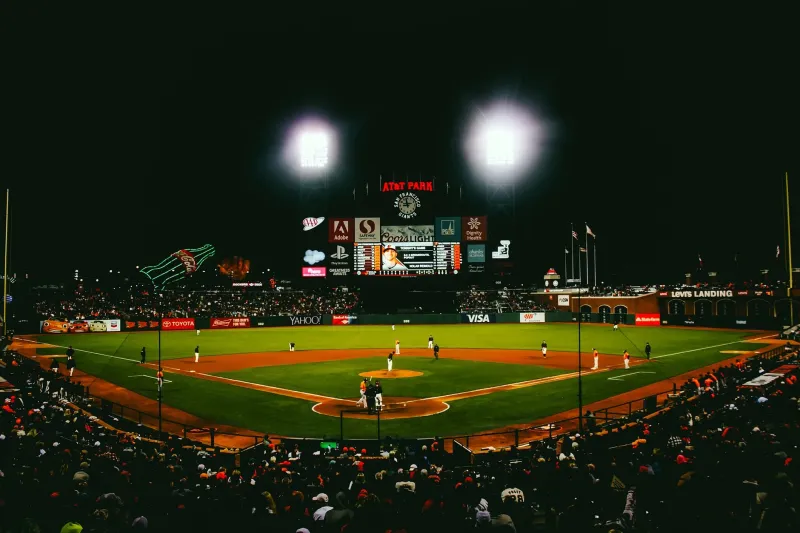
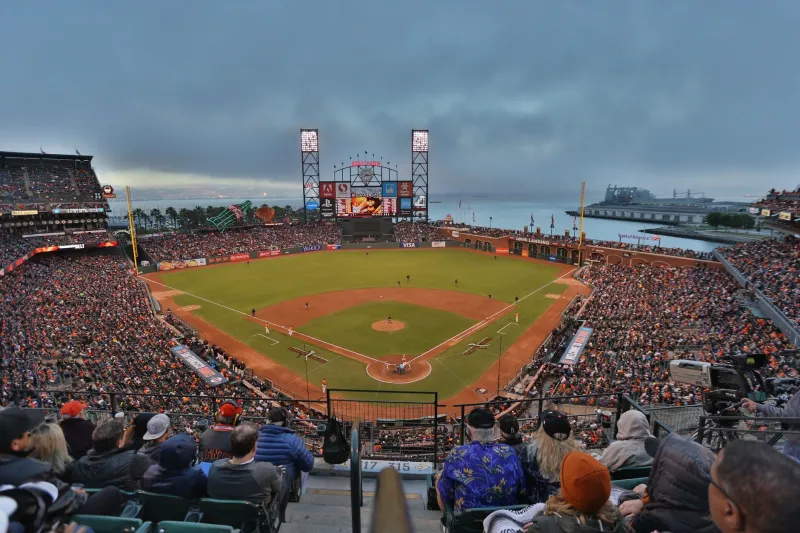
For the supporters who packed AT&T Park throughout the championship era, the years following 2012 carried a particular emotional weight. Having experienced the franchise's October excellence across multiple seasons, the San Francisco fan base developed expectations calibrated to postseason success that the roster could not reliably meet. Each first-round elimination or missed playoff berth after 2012 was measured against the standard of that October, producing a form of collective disappointment that the 2012 championship had, paradoxically, made inevitable.
This psychological dynamic is not unique to San Francisco. Championship-caliber fan bases routinely struggle to recalibrate expectations after a title run concludes. But the 2012 Giants case is instructive because the core remained largely intact for several years post-championship, creating the persistent impression that replication was imminent rather than increasingly remote.
What the 2012 Championship Teaches About Sustainability
The most durable lesson extracted from San Francisco's post-2012 trajectory concerns the distinction between championship-caliber rosters and championship-winning rosters. The former can be constructed and maintained through intelligent organizational decision-making. The latter requires, in addition to organizational intelligence, a degree of circumstantial fortune that no front office can manufacture.
The 2012 Giants were both. They were well-constructed and fortunate. In the years that followed, they remained reasonably well-constructed but encountered the kind of accumulated misfortune — injuries, aging curves, statistical regression — that no championship blueprint can fully insulate against.
That reality does not diminish what was accomplished in October 2012. If anything, it amplifies it. The convergence of talent, health, timing, and competitive fortune that produced that championship was genuinely rare — the kind of alignment that, once achieved, reveals itself as irreproducible not through organizational failure but through the fundamental mathematics of excellence. The 2012 World Series title was not the beginning of an era. It was, in the most meaningful sense, the era itself.