One Swing, One Standard: How Rentería's Series-Clinching Blow Rewrote the Language of October Clutch
There are moments in sports that do not merely end games. They redefine the vocabulary through which the games are later understood. Edgar Rentería's home run in Game 5 of the 2012 World Series belongs to that rare category — a single act so precisely timed, so visually complete, that it permanently altered the lens through which postseason drama is processed, debated, and remembered.
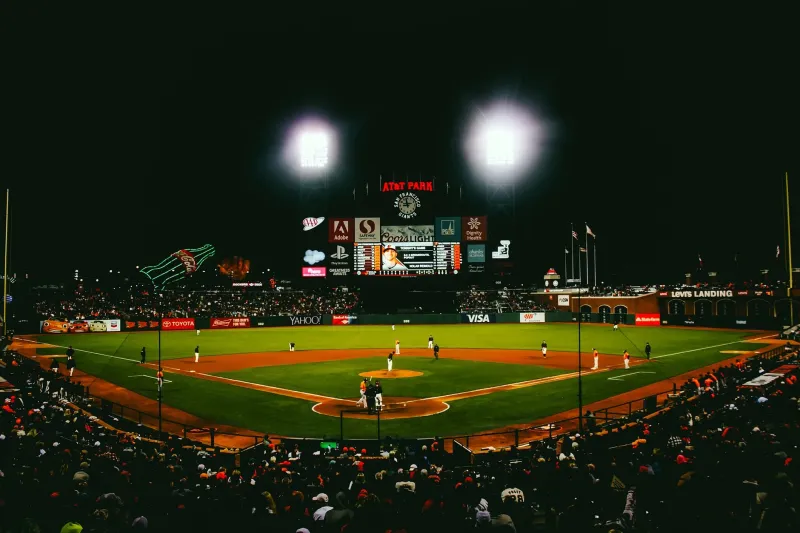
To appreciate the magnitude of that shift, it is worth pausing on the conditions that surrounded the swing itself. San Francisco had arrived at that October evening carrying the accumulated weight of a franchise that had spent decades constructing near-misses into mythology. The Detroit Tigers, for their part, had entered the Series as a formidable opponent with legitimate offensive firepower. The moment demanded a particular kind of performer — one whose history carried both the scars of previous falls and the composure to ignore them entirely.
Rentería was, in almost every conventional sense, an improbable candidate for that role.
The Weight of What Came Before
By the time the 2012 postseason arrived, Rentería's career arc had already traced the kind of trajectory that makes for complicated retrospectives. He was not a young star ascending toward a first title. He was a seasoned veteran whose previous World Series experience — most memorably with the Boston Red Sox in 2004 — had ended in MVP-caliber triumph. Yet the intervening years had introduced setbacks, injuries, and the natural erosion that time imposes on even the most gifted athletes.
His presence on San Francisco's roster was itself a statement about what the Giants valued: experience over raw projection, situational awareness over surface-level statistics. But none of that backstory fully prepares an observer for what a clutch moment actually looks like when it arrives in real time.
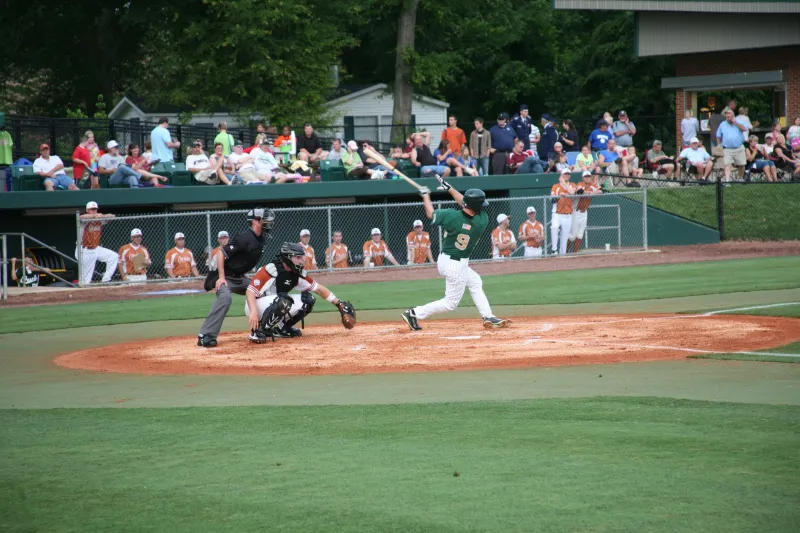
What Rentería delivered was not a grinding, situational base hit that inches a team ahead. It was an authoritative, unmistakable declaration — a home run that converted uncertainty into finality in the span of a single pitch. The visual clarity of that moment, ball leaving bat and climbing against the October sky, became the image that anchored the entire Series in public memory.
The Visual Grammar of Clutch
Sports journalism has long grappled with the concept of clutch performance, cycling through statistical frameworks and narrative constructions in an effort to pin down something that resists precise definition. The debate over whether clutch is a repeatable skill or a retrospective label applied to successful outcomes has occupied analysts for generations.
What Rentería's home run contributed to that conversation was not a resolution but a reference point. Suddenly, discussions of subsequent October heroics carried an implicit comparison — a before-and-after structure in which his swing occupied the "before" position. When a player delivered in a high-leverage postseason moment in the years that followed, broadcasters and writers reached instinctively for the Rentería framework: the veteran at the end of his run, the moment larger than the individual, the outcome that settled every prior doubt in a single motion.
This is how individual performances become cultural touchstones. They do not merely exist as data points in a box score. They become the grammar through which future stories are told.
How Broadcast and Analysis Absorbed the Moment
Television coverage of the World Series has always been as much about storytelling as about play-by-play accuracy. The camera angles chosen, the narrative threads emphasized in the booth, the slow-motion replays that follow a decisive blow — all of these editorial decisions shape how a moment is absorbed by a national audience.
The coverage of Rentería's home run demonstrated, with unusual clarity, how a broadcast can elevate a single swing into something approaching mythology. The deliberate pacing of the replay, the restraint in the announcing booth that allowed the crowd noise to carry the emotional weight, the decision to linger on Rentería's expression as he rounded the bases — each choice reinforced the sense that what viewers had just witnessed was not merely a Series-clinching hit but a statement about the nature of October itself.
In the years since 2012, analysts who study postseason broadcasting have noted a measurable shift in how networks frame veteran performers in high-leverage situations. The Rentería template — the backstory of accumulated experience, the singular decisive moment, the visual punctuation of a home run arc — appears with striking frequency in the language used to contextualize subsequent clutch performances. Whether this is a conscious editorial choice or an organic absorption of a shared cultural memory is difficult to determine, but the pattern is difficult to ignore.
What It Demands of the Next Generation
Perhaps the most significant and least examined consequence of Rentería's 2012 moment is the standard it quietly imposed on every postseason performer who followed. Clutch, in the popular imagination, had always been somewhat abstract — a quality you recognized after the fact rather than anticipated in advance. The Rentería home run gave clutch a specific visual shape.
This creates a burden that subsequent October heroes carry whether they are aware of it or not. A walk-off single in a divisional series, however valuable in context, does not carry the same narrative weight as a home run that seals a championship. A grinding, multi-at-bat comeback over the course of a full game is harder to reduce to a single iconic image. The postseason landscape, already unforgiving in its demands, now operates against a benchmark that prizes not just success but the visual and dramatic completeness of how that success is achieved.
For younger fans who came of age watching October baseball after 2012, Rentería's swing is not history — it is the baseline. It is the moment against which their own understanding of what a champion looks like was first calibrated.
The Enduring Architecture of One October Evening
More than a decade removed from that Game 5 evening, the analytical community has continued to refine its tools for measuring postseason performance. Win probability models, leverage indices, and contextual ERA adjustments have all grown more sophisticated. And yet the conversation about clutch — about what it looks and feels like when a player rises to an occasion larger than the sum of his statistics — still gravitates back, with notable consistency, to moments like Rentería's.
This is not a failure of analysis. It is a recognition that certain performances carry meaning that exceeds what any single metric can capture. The arc of that home run, the timing of its arrival, the biography of the man who hit it — these elements combine into something that functions less like a statistic and more like a parable.
At WSC 2012 Vault, we return to October of that year not simply to catalog what happened but to understand why it continues to matter. Rentería's swing endures not because it was the most statistically improbable outcome of that Series, but because it crystallized, in a single image, everything that the postseason promises and rarely delivers: the right player, the right moment, and the irreversible finality of a ball disappearing into the night.