Racing Against Forgetting: The Archivists and Collectors Determined to Save Every Artifact of October 2012
History does not preserve itself. The instinct to assume that significant events leave behind a naturally comprehensive record is one of the most persistent misconceptions about how the past survives into the future. In reality, the historical record of any event—including a World Series championship—is the product of deliberate choices made by individuals and institutions who decide, often under time pressure and resource constraints, what is worth saving and how it should be stored. For the 2012 World Series, those choices are still being made.
What Is at Risk
The categories of material at risk of permanent loss are broader than most people recognize. At the obvious end of the spectrum sit the official records: game logs, official scorecards, broadcast master recordings held by the networks, and the formal documentation maintained by Major League Baseball itself. These materials are, in general, reasonably well protected. The organizations that hold them have established protocols for long-term storage, and the significance of a World Series ensures that institutional attention remains relatively consistent.
The more precarious category is everything else. Personal photographs taken at the ballpark during the Series games—not the professional images captured by credentialed photographers, but the thousands of images taken by fans in the stands—represent an irreplaceable visual record that exists primarily on personal devices and aging hard drives. Home recordings of the television broadcasts, made by fans who wanted to preserve the experience, sit in formats that are increasingly difficult to access. Scorecards kept as souvenirs, ticket stubs tucked into scrapbooks, programs annotated during the games themselves: these objects carry information that official records do not.
Dr. Catherine Yuen, a media preservation specialist who has worked with several Bay Area institutions, describes the challenge in direct terms. "The official record tells you what happened. The unofficial record tells you what it was like to be there. Those are different things, and they require different preservation strategies."
The San Francisco History Center's Effort
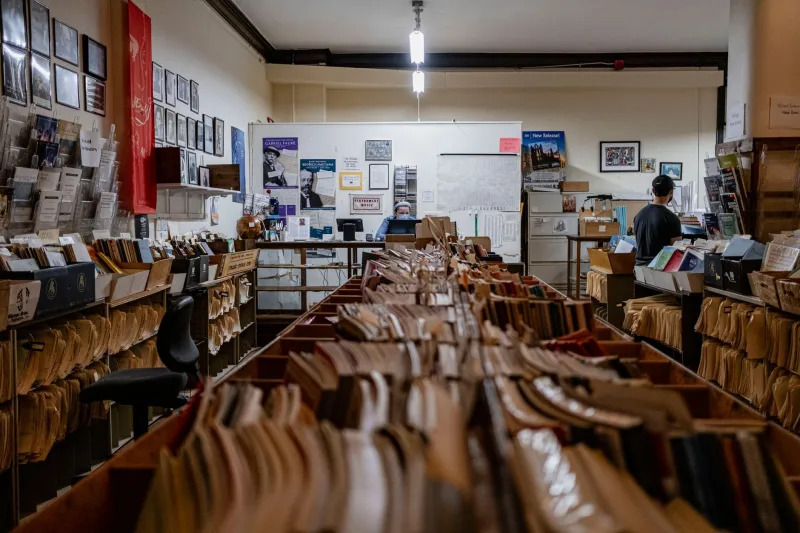
The San Francisco History Center, housed within the San Francisco Public Library system, moved quickly in the months following the 2012 championship to begin a systematic collection effort. The Center had experience with sports-related acquisitions—its holdings already included materials from earlier Giants seasons and from the long history of the city's relationship with professional baseball. The 2012 championship, however, presented a collection opportunity of unusual scale and urgency.
Librarians and archivists reached out to community organizations, neighborhood groups, and individual fans, soliciting donations of materials related to the championship. The response was substantial. Within the first year following the Series, the Center had received several hundred individual donations ranging from single photographs to comprehensive personal archives assembled by dedicated collectors over multiple seasons.
The digitization of these materials presented its own set of challenges. Physical photographs required scanning at resolutions sufficient to capture fine detail while remaining manageable in terms of file size. Objects such as programs and scorecards needed to be photographed in ways that preserved their three-dimensional qualities—the texture of the paper, the specific character of handwritten annotations—as well as their informational content. Audio recordings made on consumer equipment required careful processing to remove degradation without altering the underlying content.
The Independent Collectors
Parallel to the institutional preservation effort, a network of independent collectors has played an essential and sometimes underappreciated role in maintaining the material record of the 2012 championship. These individuals operate outside the formal archival system, driven by personal passion rather than institutional mandate, and their collections reflect priorities and perspectives that institutional archives do not always capture.
Robert Castellano has been collecting Giants memorabilia for over thirty years. His holdings include materials from every postseason the team has participated in during that period, and his 2012 collection is among the most comprehensive in private hands. It encompasses not only the expected items—programs, ticket stubs, commemorative merchandise—but also a range of objects that official collectors might overlook: the menu from a Mission District restaurant that hosted a viewing party during the Series, a handmade banner photographed outside AT&T Park on the night of the clinching game, a local newspaper from a small Northern California town that ran the championship story on its front page.
"The big stuff gets saved," Castellano explained during a conversation at his home in the East Bay. "What I'm interested in is the stuff that shows you what it was like to be a fan in 2012. That's the stuff that disappears."
The challenge facing collectors like Castellano is twofold. First, the physical materials they hold require proper storage conditions to prevent deterioration—conditions that are expensive to maintain and that many private collectors cannot sustain indefinitely. Second, the knowledge they carry about the provenance and context of their materials is itself at risk. An object without its story is significantly less valuable as a historical artifact, and the stories exist primarily in the memories of the collectors themselves.
Digital Preservation and Its Complications
The assumption that digital materials are inherently more durable than physical ones is, archivists are quick to point out, mistaken. Digital files are subject to their own forms of decay and obsolescence. File formats that were standard in 2012 are already becoming difficult to access in some contexts. Storage media that seemed reliable a decade ago has proven less stable than anticipated. And the sheer volume of digital material generated around the 2012 championship—social media posts, blog entries, fan forum discussions, amateur video recordings—presents a scale of preservation challenge that no single institution can address comprehensively.
Organizations such as the Internet Archive have worked to capture snapshots of web content from the championship period, but their coverage is inevitably incomplete. The ephemeral, real-time character of social media in 2012 means that a significant portion of the immediate fan response to the Series—the posts made in the minutes following the final out, the exchanges between fans across the country—has already been lost.
What Survives and Why It Matters
Despite the losses, the preservation record for the 2012 World Series is, on balance, considerably more complete than it might have been without the efforts described above. The combination of institutional collecting, independent archiving, and digital preservation initiatives has produced a record that, while imperfect, is rich enough to support serious historical inquiry.
The reason that inquiry matters extends beyond baseball. The 2012 World Series was a significant cultural event in the life of the San Francisco Bay Area—one that intersected with the city's evolving identity, its demographic shifts, and its position within the broader landscape of American professional sports. A comprehensive archive of that event is not merely a resource for baseball historians. It is a resource for anyone seeking to understand what San Francisco was in the autumn of 2012.
The work of preservation is, by definition, never finished. New materials surface regularly—a box of photographs discovered during a home renovation, a recording made by a fan who has only recently learned that such things have historical value. Each addition to the record is an argument against the assumption that the past takes care of itself. It does not. It requires advocates, and in the case of October 2012, it has been fortunate enough to find several.