The Unlikely Hero: How Edgar Rentería's October Brilliance Undid Detroit's Championship Dreams
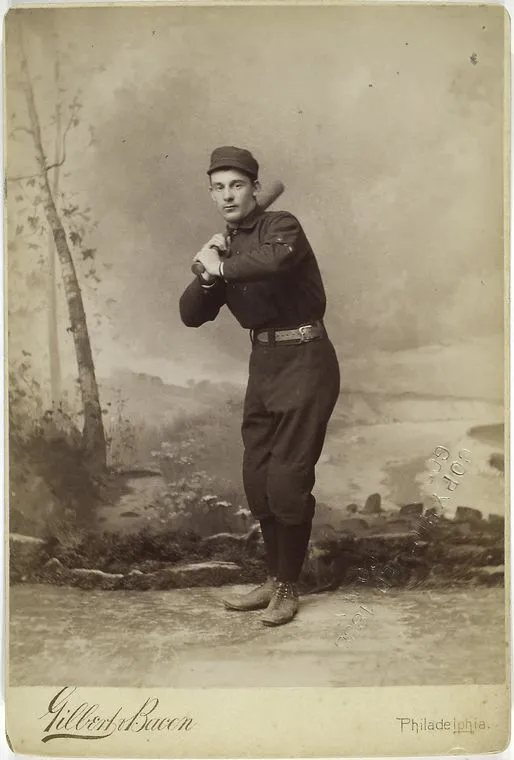
Photo: New York Public Library, No restrictions, via Wikimedia Commons
By the time the 2012 World Series arrived at its decisive fifth game, the conventional wisdom surrounding the San Francisco Giants held that their rotation and their bullpen would be the deciding factors. Detroit's lineup — anchored by Miguel Cabrera and a supporting cast of legitimate power threats — had entered the Fall Classic as the presumptive offensive juggernaut. What few analysts had adequately accounted for was the quiet, methodical presence of Edgar Rentería, a shortstop acquired mid-season whose career arc had appeared to be winding toward a graceful conclusion rather than a historic crescendo.
What unfolded across five games in late October 2012 remains one of the most compelling individual performances in World Series history — a masterclass in situational hitting, professional plate discipline, and the kind of clutch execution that separates the merely talented from the genuinely great.
From Roster Addition to Roster Cornerstone
Rentería's path to the 2012 World Series was not the story of a superstar in his prime. He had been brought aboard as an experienced presence, a veteran capable of providing stability in the middle of the infield and occasional offensive production. His regular-season numbers offered encouragement without inspiring awe. Yet the postseason, as it so often does, revealed dimensions of a player that the grind of a 162-game schedule can obscure.
From his very first World Series at-bat, something was visibly different. Rentería was not guessing at pitches; he was reading them with the patience of a man who had stood in the batter's box across more than fifteen major-league seasons. His approach at the plate — disciplined, selective, and fundamentally sound — stood in marked contrast to the free-swinging tendencies that Detroit's pitchers had exploited against other Giants hitters throughout the series.
Dissecting the Plate Discipline
A careful review of Rentería's at-bats during the 2012 World Series reveals a hitter operating with uncommon clarity. Against Detroit's starting rotation, he consistently worked counts deep, forcing pitchers to throw strikes in situations where they would have preferred to expand the zone. His willingness to take borderline pitches — particularly breaking balls low and away — denied opposing hurlers the early-count advantages that had neutralized several of his teammates.
His swing mechanics during critical moments were equally instructive. Rentería maintained a compact, level path through the zone, minimizing the likelihood of chasing pitches that broke out of the hitting area. Where some veterans become tentative in high-leverage situations, Rentería's mechanics actually tightened, a reflection of muscle memory refined across a career spanning multiple organizations and two prior World Series appearances.
This was not accidental consistency. This was the product of professional preparation applied under the brightest lights in the sport.
The Defining Swing: Game 5
No moment in Rentería's 2012 postseason run carries more weight than his home run in Game 5, a swing that effectively closed the door on Detroit's championship aspirations. With the series already tilted in San Francisco's favor and the Giants positioned to clinch, Rentería stepped to the plate in a moment that demanded either confirmation or collapse.
The pitch he connected with was not a mistake — it was a competitive offering from a pitcher attempting to navigate a dangerous situation. What made Rentería's response so remarkable was the absence of any apparent alteration in his approach. He did not lunge. He did not overswing in an attempt to manufacture power that the moment seemed to demand. He simply executed the same disciplined, compact stroke he had demonstrated throughout the series, and the result was a baseball sailing well beyond the outfield fence.
That home run did not merely add runs to a scoreboard. It fractured Detroit's psychological momentum at the precise instant when the Tigers' dugout needed to believe a comeback remained viable.
Contextualizing the Performance Against Detroit's Lineup
One of the underappreciated dimensions of Rentería's series MVP award is what it represented in context. Detroit had entered the World Series with one of the most formidable offensive lineups in the American League, and the expectation among many analysts was that the Tigers' bats would eventually overwhelm San Francisco's pitching staff. The Giants' strategy, accordingly, needed to neutralize Detroit's scoring capacity while manufacturing enough offense to maintain leads.
Rentería's production provided precisely that offensive cushion. His hits arrived in situations where they extended innings, drove in runners from scoring position, and most critically, arrived ahead of the bullpen's ability to protect advantages. Manager Bruce Bochy structured his lineup around the assumption that Rentería would deliver professional at-bats; the veteran shortstop returned that faith with compounding interest.
A Legacy Sealed in Five Games
Edgar Rentería's 2012 World Series performance will occupy a permanent and honored position in the historical record of San Francisco Giants baseball. It is a story that rewards close examination — not because it conforms to the template of the dominant superstar carrying a franchise, but precisely because it defies that template.
He was not the Giants' highest-paid player. He was not their most celebrated acquisition. He was, however, their most indispensable performer when the championship was on the line, a truth that the final statistics confirm and that anyone who watched those five October games will not soon forget.
In the vault of 2012 World Series memories, Rentería's October stands as one of its most luminous artifacts.